THE SINGAPORE EXPERIENCE
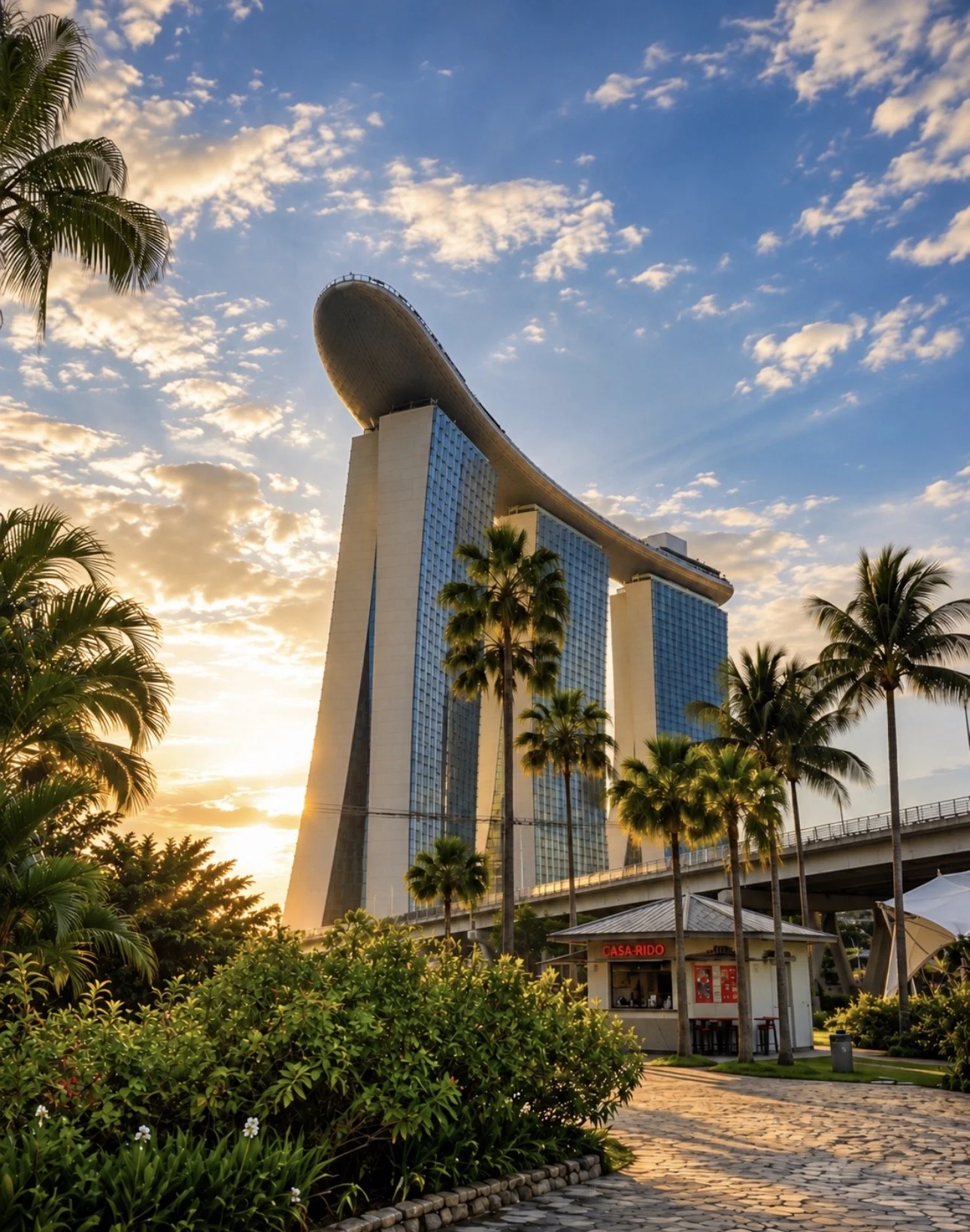
Singapore is a city of contrasts, yet somehow, everything belongs. A striking skyline rises beside neighborhoods shaped by history, where temples and mosques, gardens and quiet streets reveal a different rhythm of the city. Chinese, Malay, Indian and international influences are woven naturally into its architecture, its food and its everyday life. Singapore is polished, remarkably organized and undeniably modern, but look beyond its skyline and there is something more—layers of color, culture and history waiting to be discovered.
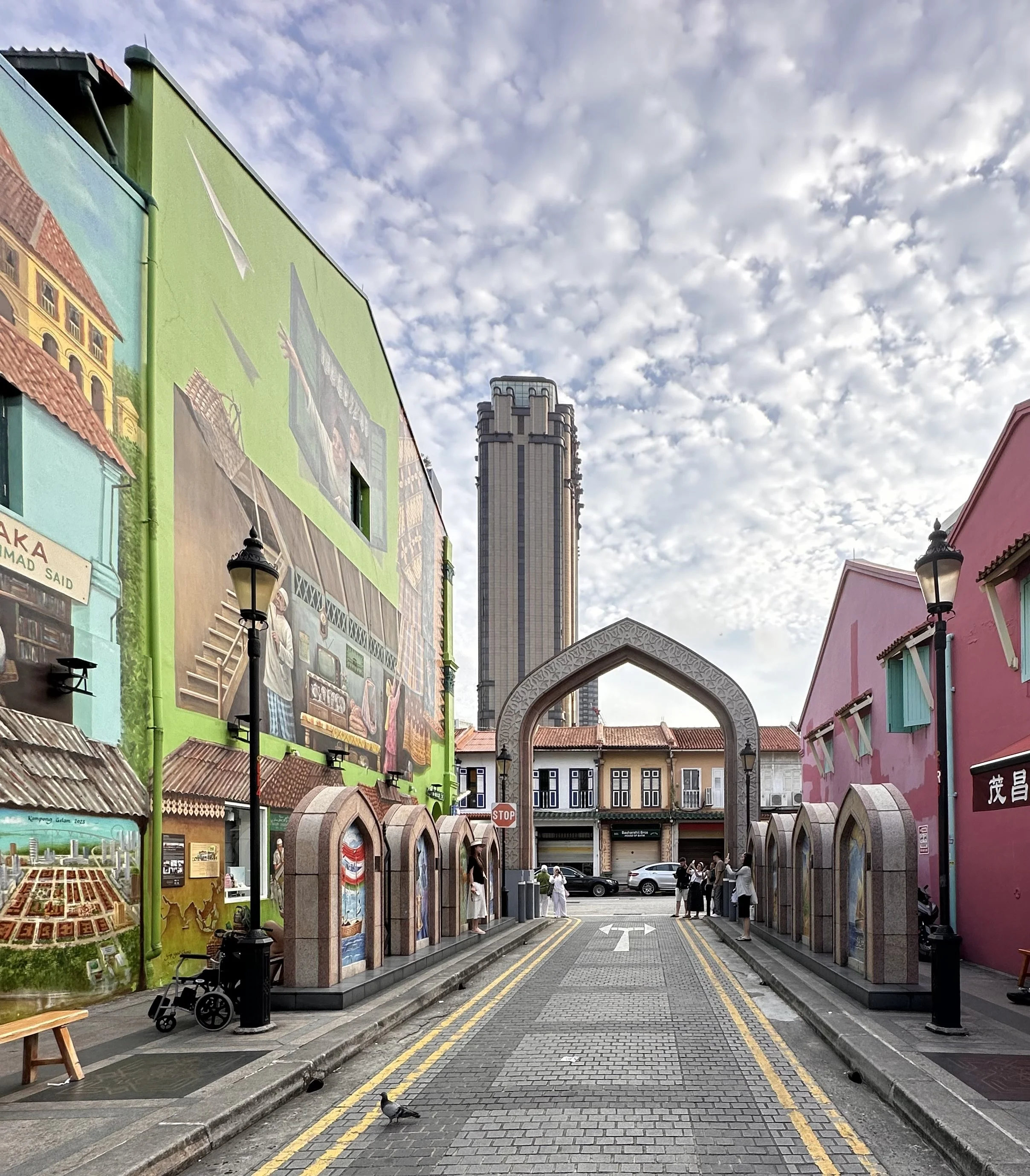
Singapore changes when you leave its familiar skyline behind. In Kampong Glam, color takes over. Painted façades and old shophouses tell another part of the city’s story, while modern Singapore continues to rise quietly behind them.
The contrast should feel impossible. Somehow, it doesn’t.
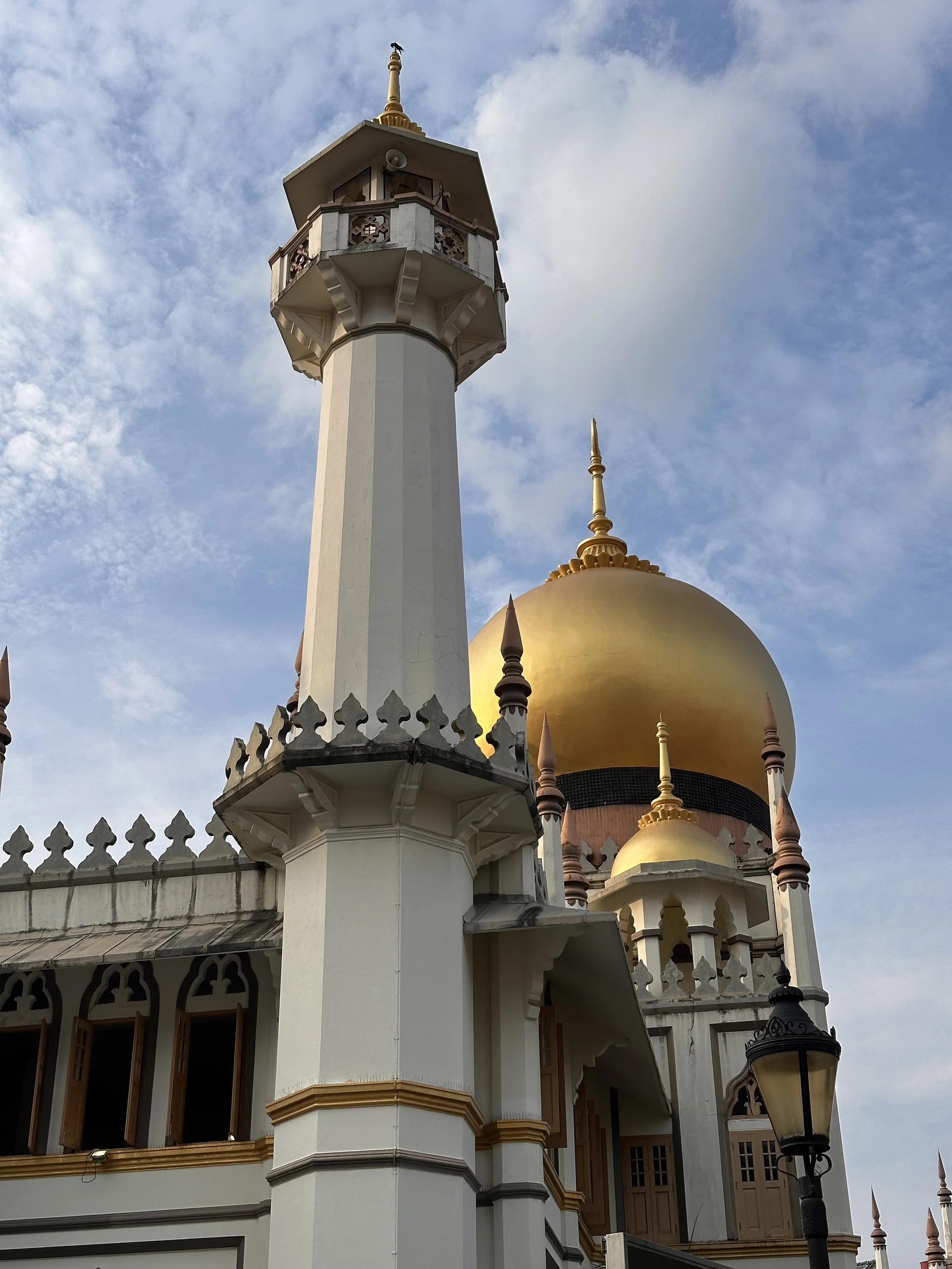
At the heart of Kampong Glam stands Sultan Mosque, its golden dome rising above streets shaped by generations of Malay and Muslim life. Around it, the neighborhood tells a much larger story—one influenced by the many communities that passed through, traded here and eventually became part of Singapore itself.
There is something beautiful in the way that history remains present here, not preserved apart from the city, but simply living alongside the Singapore of today.
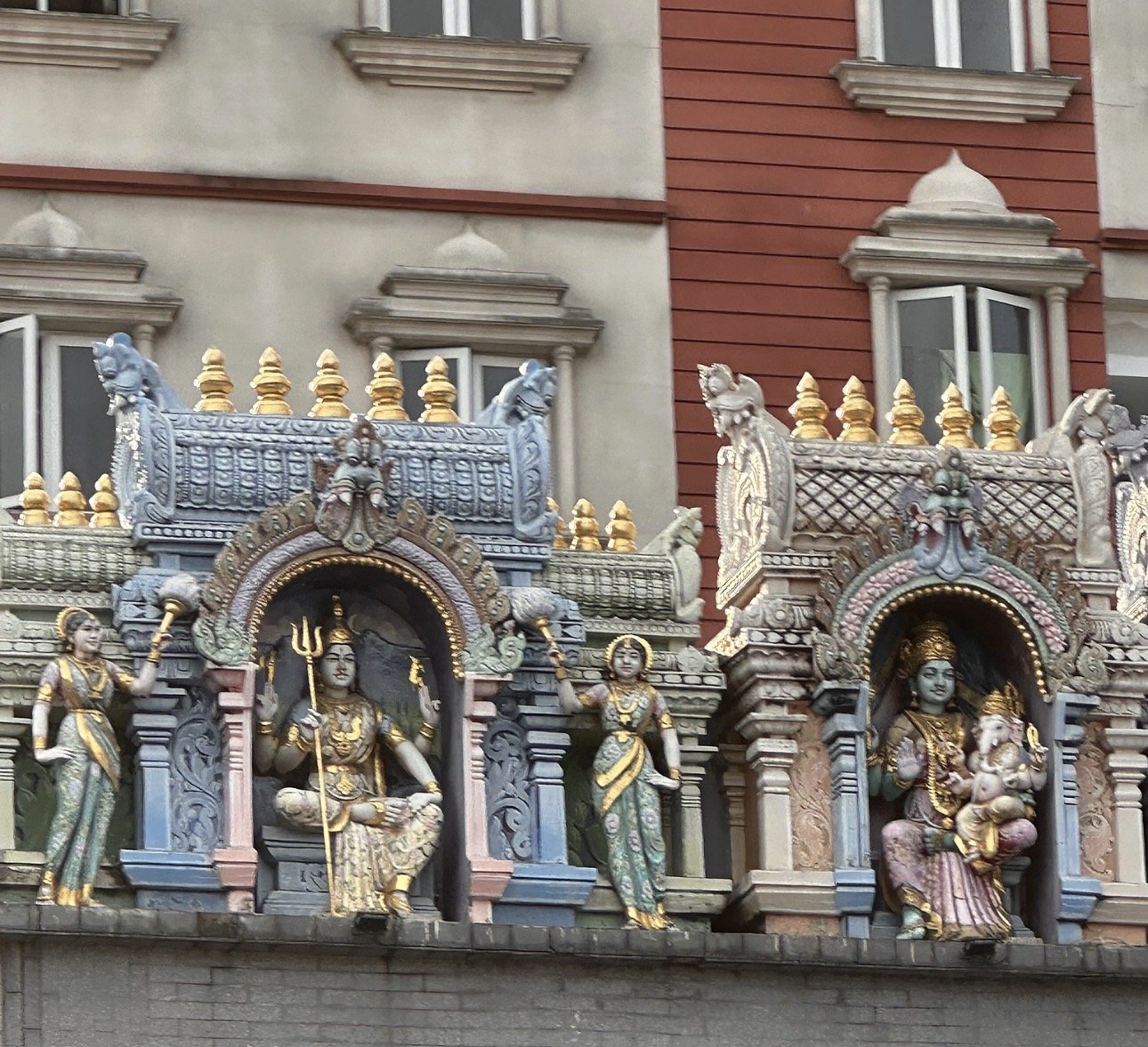
From Kampong Glam, the character of the city shifts again in Little India. Color becomes more intricate, architecture more ornate, and Hindu temples reveal another layer of the cultures that have shaped Singapore.
Different traditions, different histories, yet only a short distance apart.
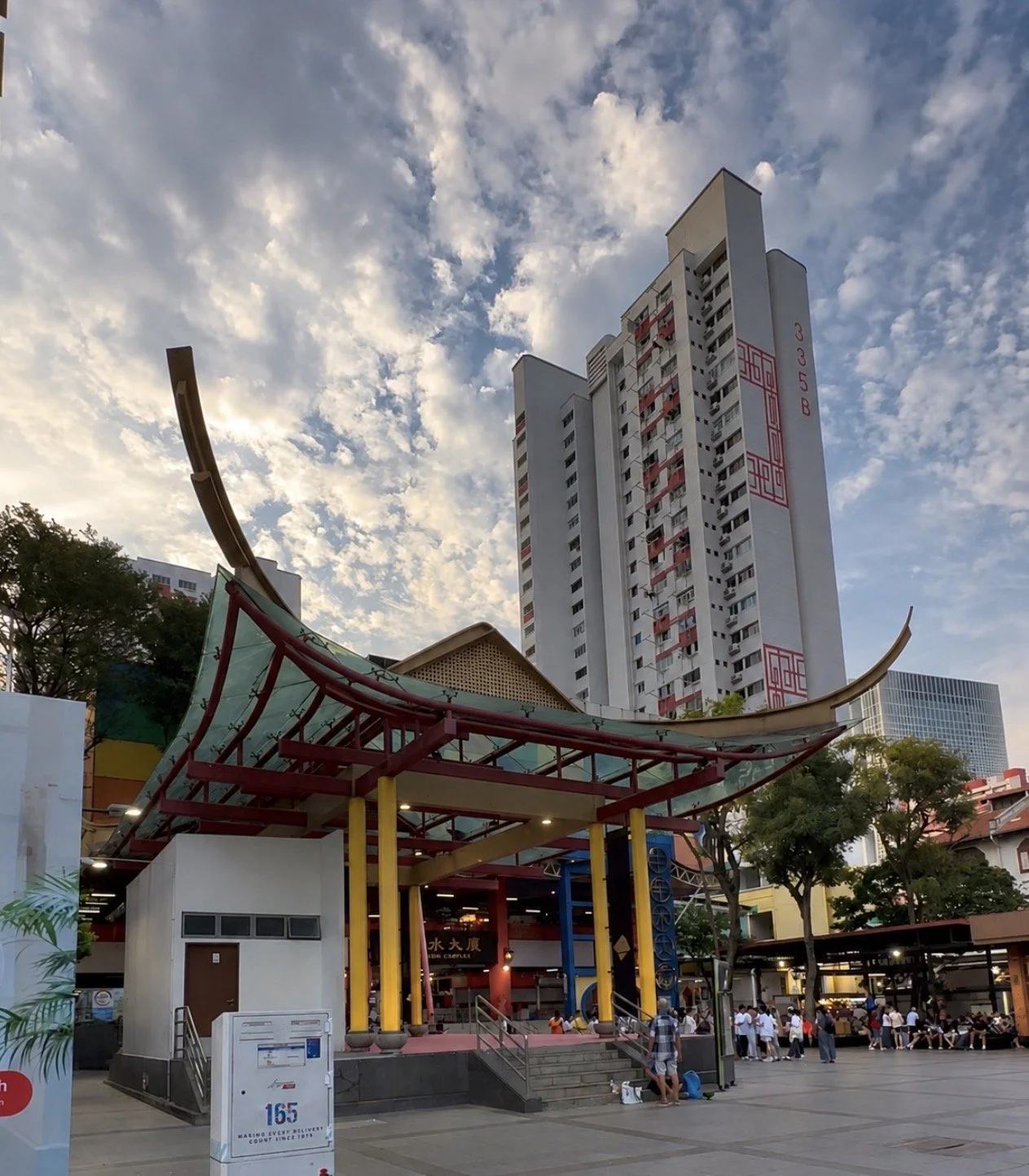
Chinatown revealed yet another side of Singapore. What caught my attention was not simply the traditional architecture, but the way it existed so naturally against the modern city rising behind it.
By this point, I was beginning to understand that Singapore’s contrasts are not really contrasts at all. They are simply different parts of the same place, existing side by side.
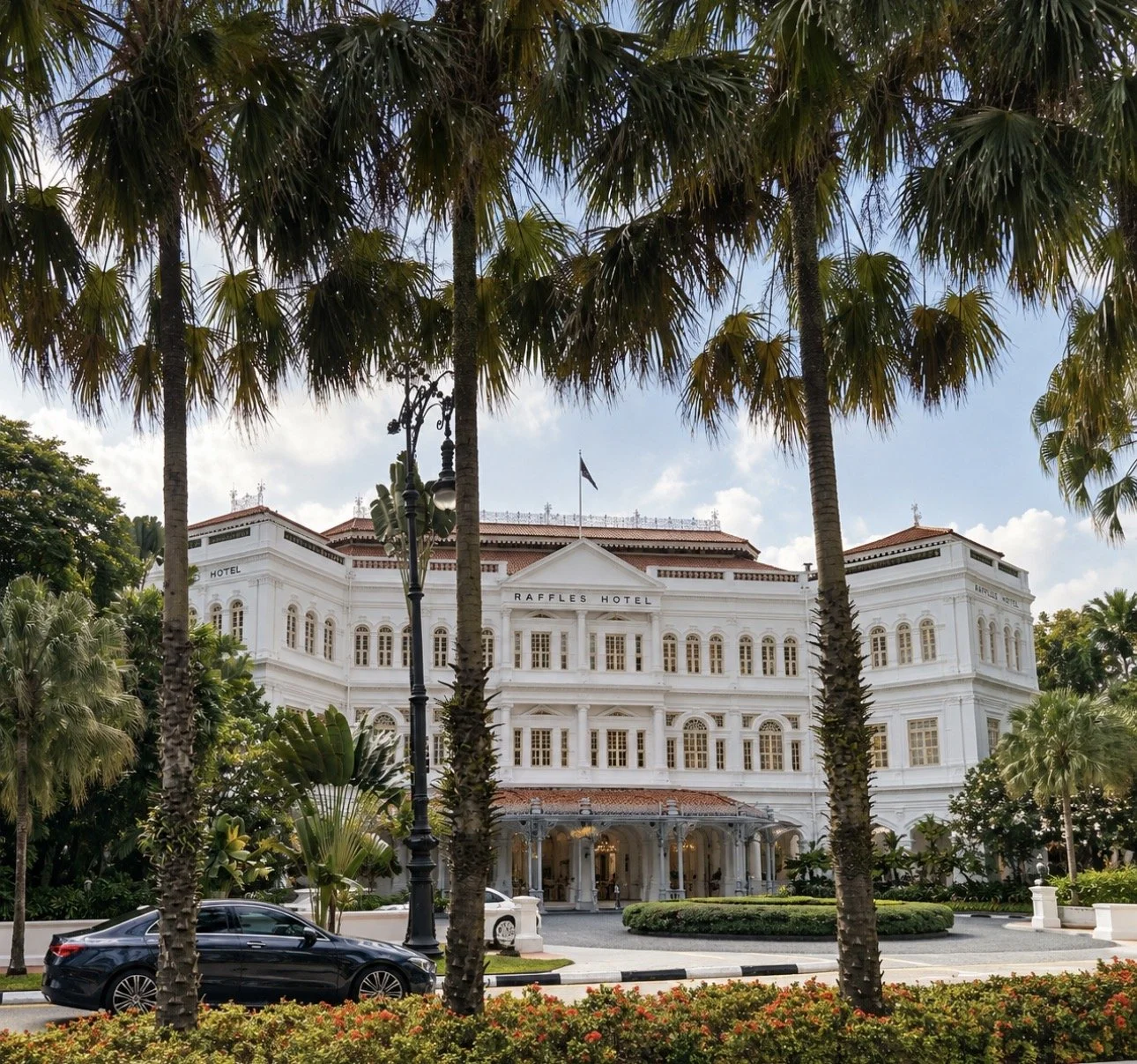
Raffles Hotel deserves a place of its own in Singapore’s story. Opened in 1887, it has watched the city transform around it, while its white façade and unmistakable architecture have remained one of Singapore’s enduring landmarks.
Perhaps that is what makes this part of the city so fascinating. Singapore’s story reaches far beyond the skyline we recognize today—from its early maritime communities and trading settlements to the modern city that grew around them. Raffles belongs somewhere in between, a reminder of another chapter still standing in the middle of it all.
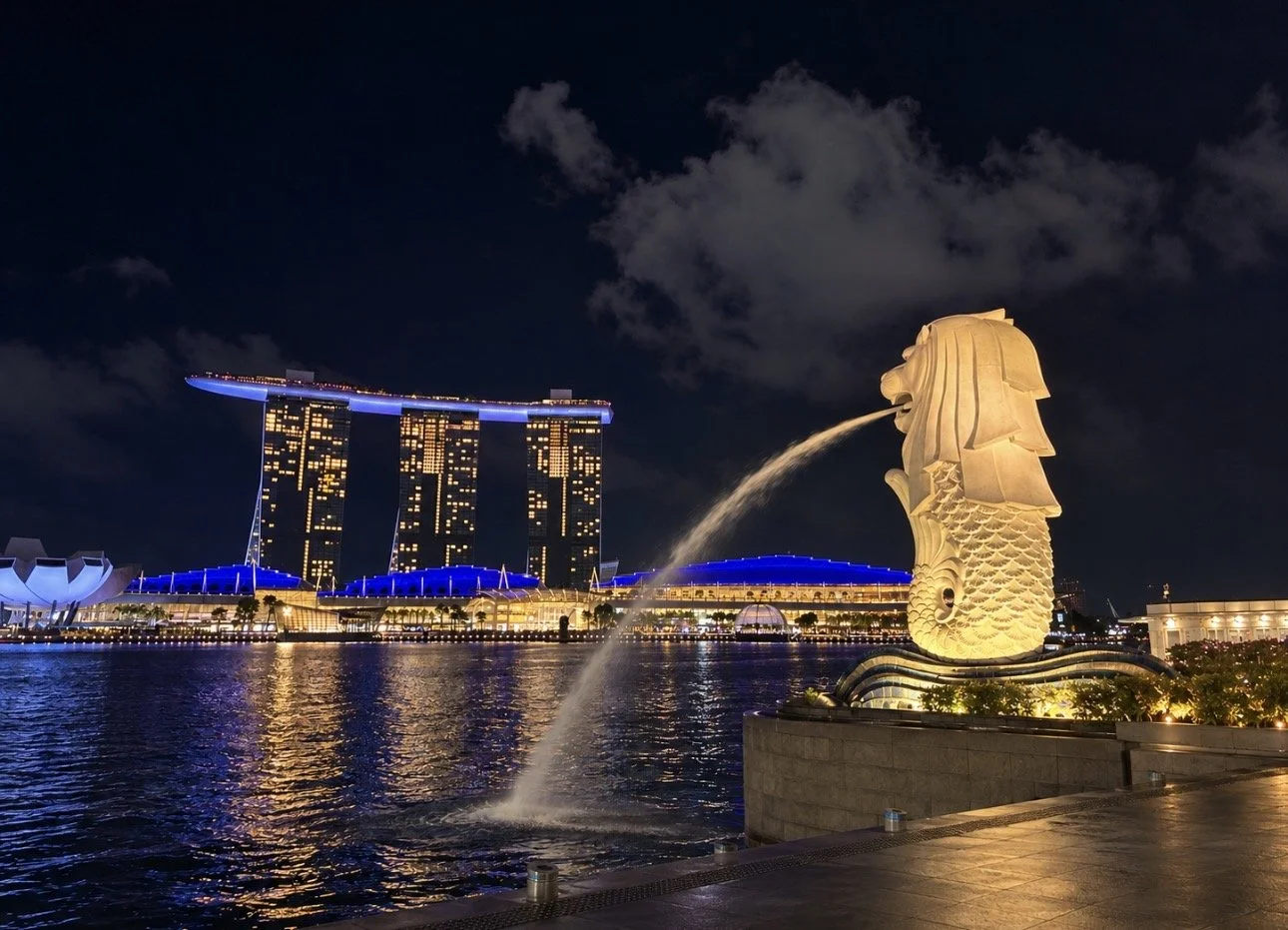
Long before the skyline, there was the sea. Singapore’s position along important maritime routes made it a place of settlement and trade centuries before the modern city took shape.
The Merlion brings two parts of that story together. Its fish-like body recalls Singapore’s maritime past and the ancient settlement known as Temasek, while its lion’s head represents Singapura—the “Lion City”—and the legend of a Sumatran prince who encountered a lion after arriving on the island.
Standing at the edge of Marina Bay today, with the city that Singapore became rising behind it, the symbolism feels almost perfectly placed.
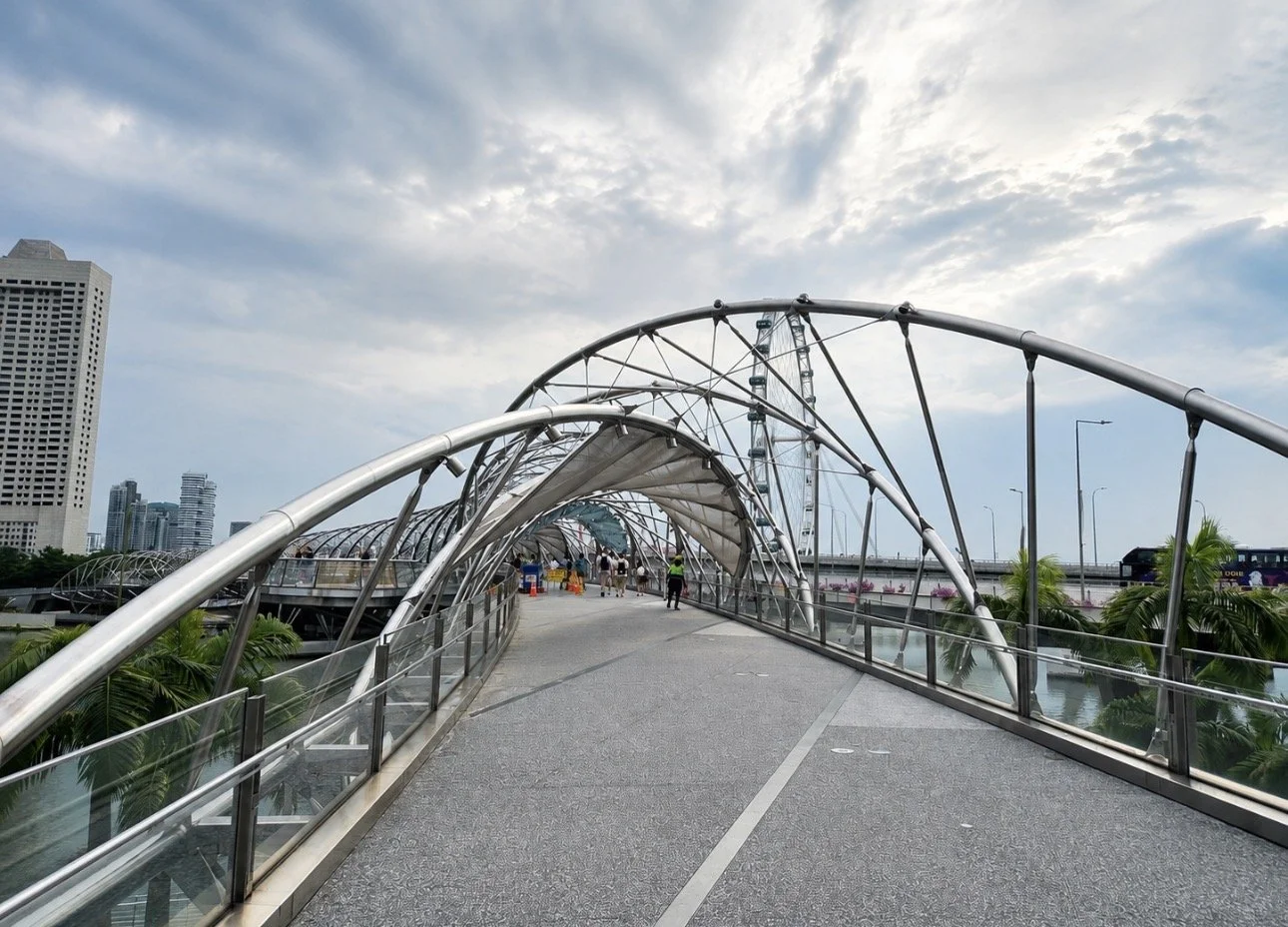
From history into modern Singapore, the transition felt almost seamless. Walking through the Helix Bridge, surrounded by its repeating steel structure, I felt as though I were moving through a matrix—a transformation happening around me as the city opened ahead in glass, steel and water.
It was more than crossing from one side of the bay to another. It felt like crossing into another Singapore.
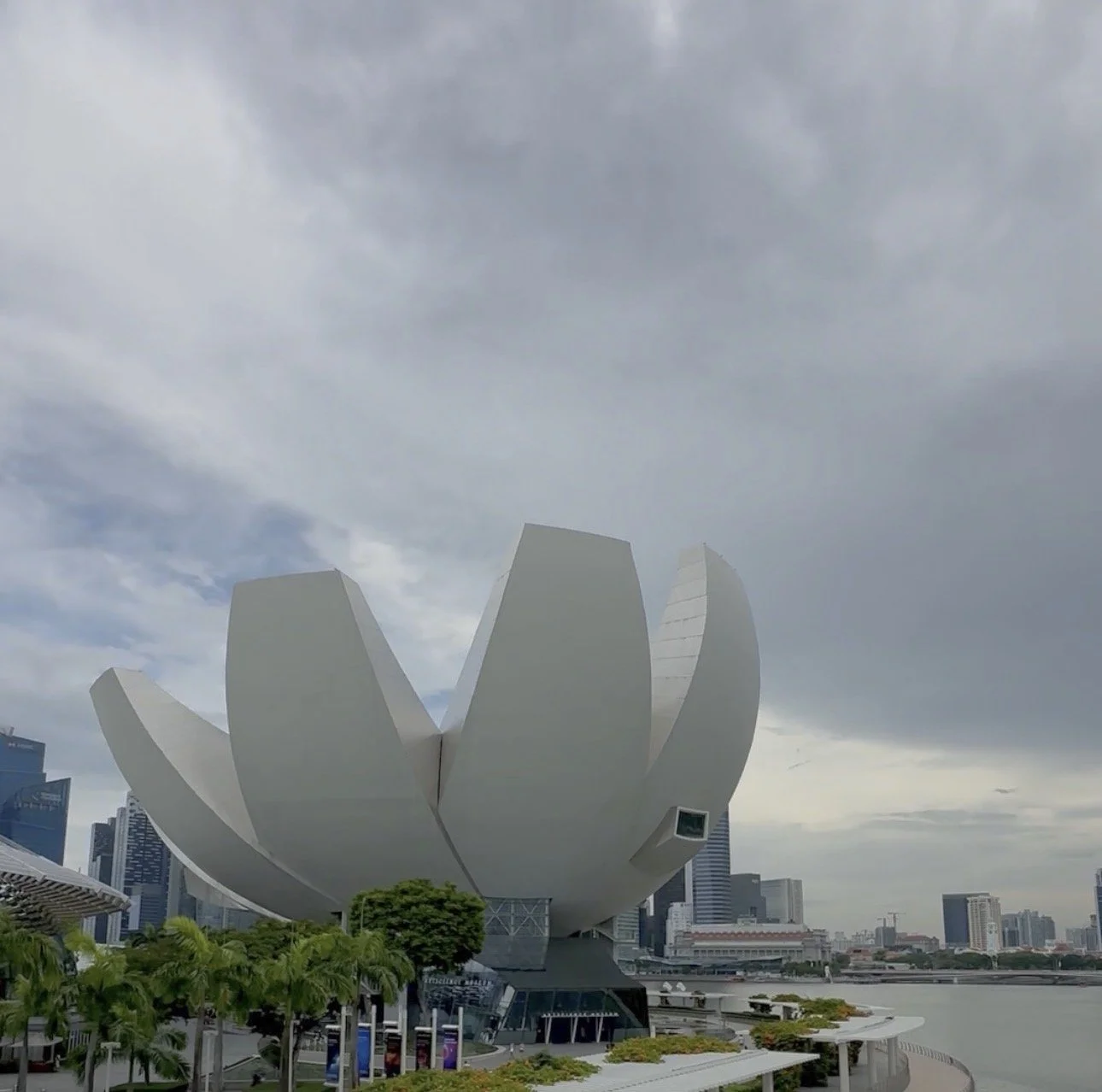
Emerging from the bridge, the architecture of Marina Bay begins to feel almost sculptural. The ArtScience Museum was one of those buildings that made me stop and look—not because I knew what I was supposed to see, but because its form seemed to change depending on where I stood.
Against the water and the skyline, it felt less like a building placed in the city and more like part of the composition itself.
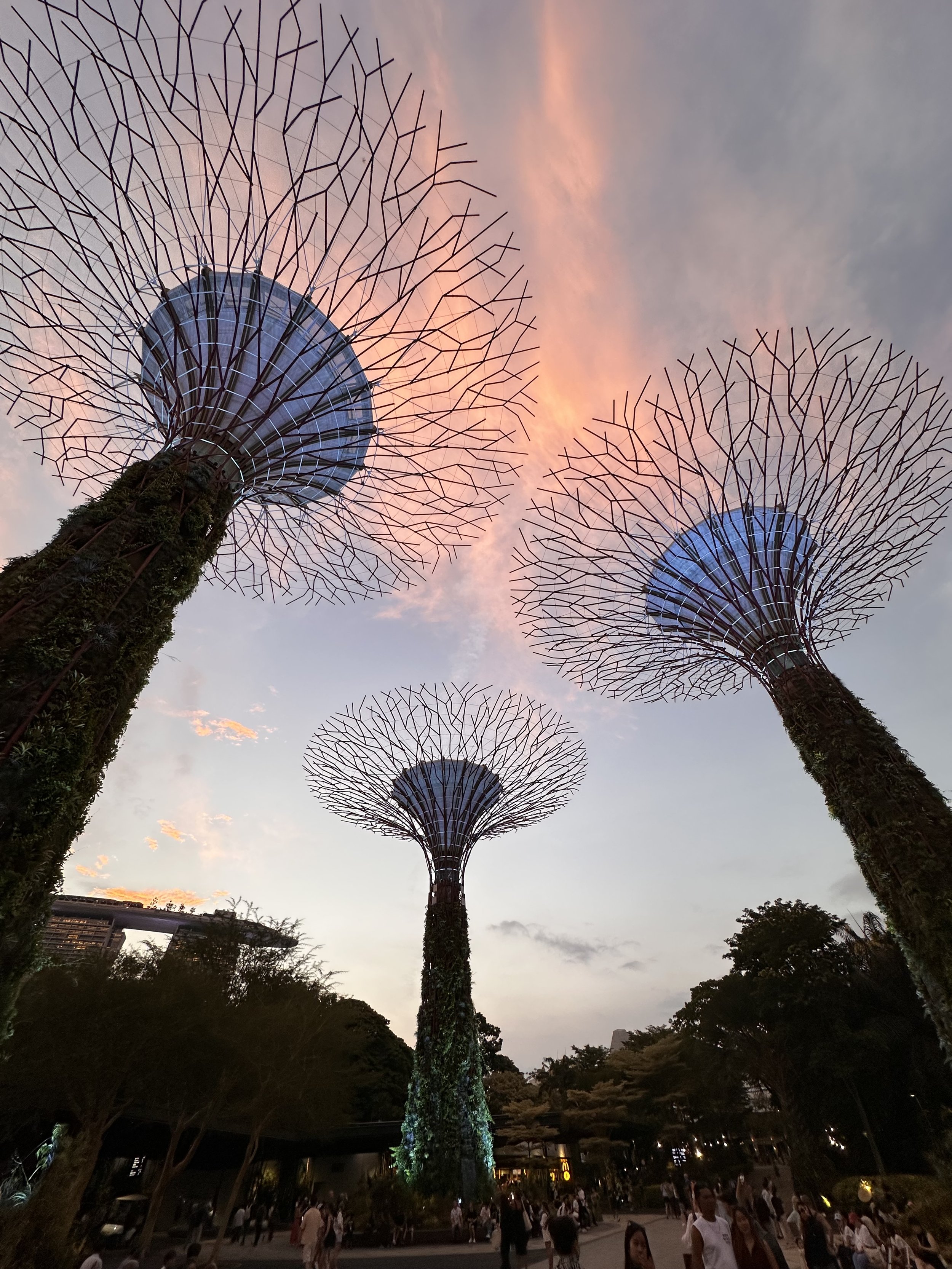
Gardens by the Bay felt like another expression of the Singapore I had been discovering—a place where nature and imagination seem to exist without competing with one another. Standing beneath the Supertrees, their scale was almost difficult to take in. They were unmistakably engineered, yet wrapped in living plants and reaching into the sky, they somehow felt alive.
As daylight began to disappear and the sky turned pink above them, the entire place seemed to be waiting for something.
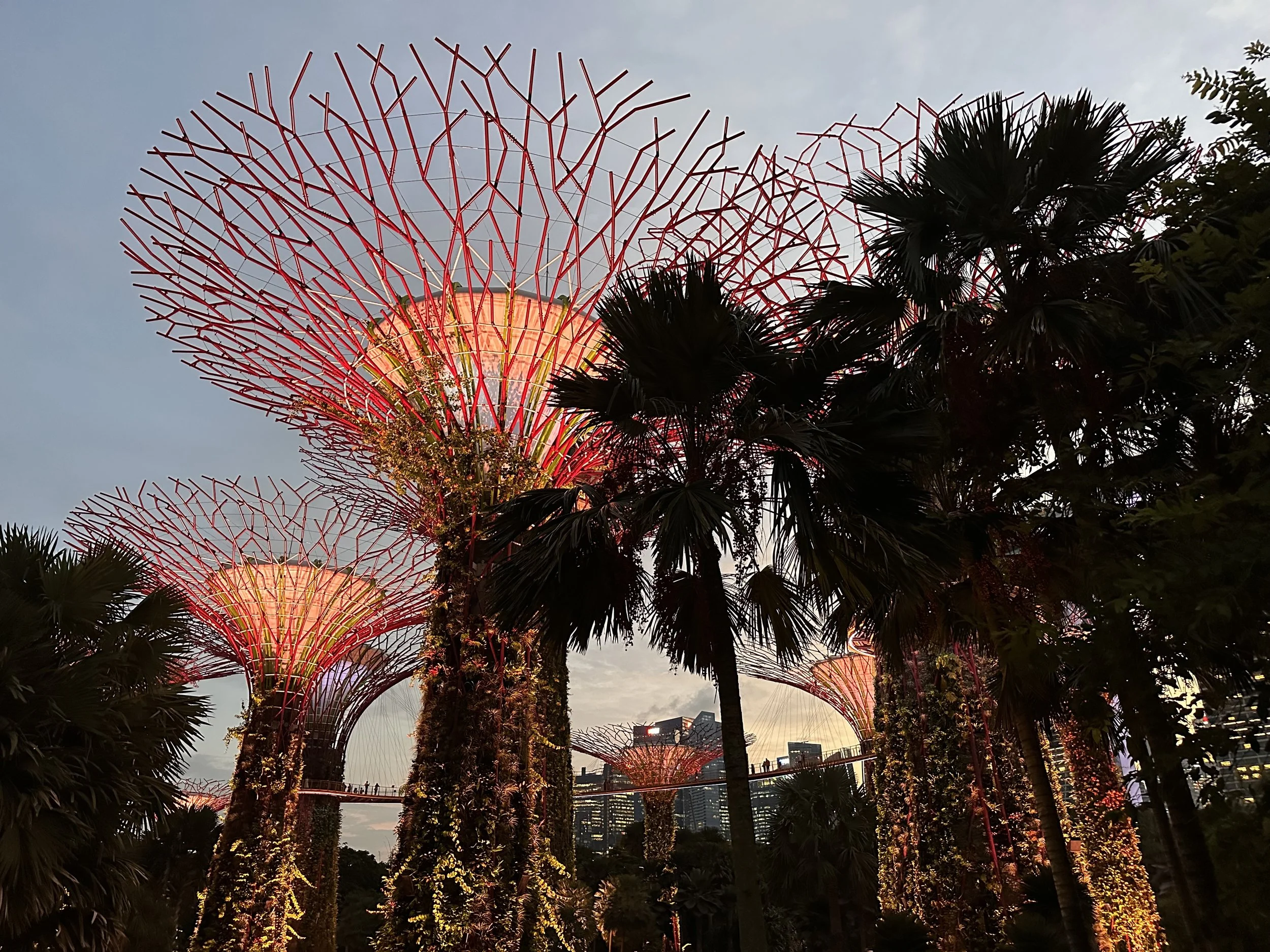
And then, at 7:45, the Supertrees came alive.
Light moved through them as music filled the gardens, transforming something already extraordinary into something completely different. Standing there beneath them, watching the structures change with the music, it felt less like a light show and more like the garden itself had awakened.
For a few minutes, everyone simply looked up.
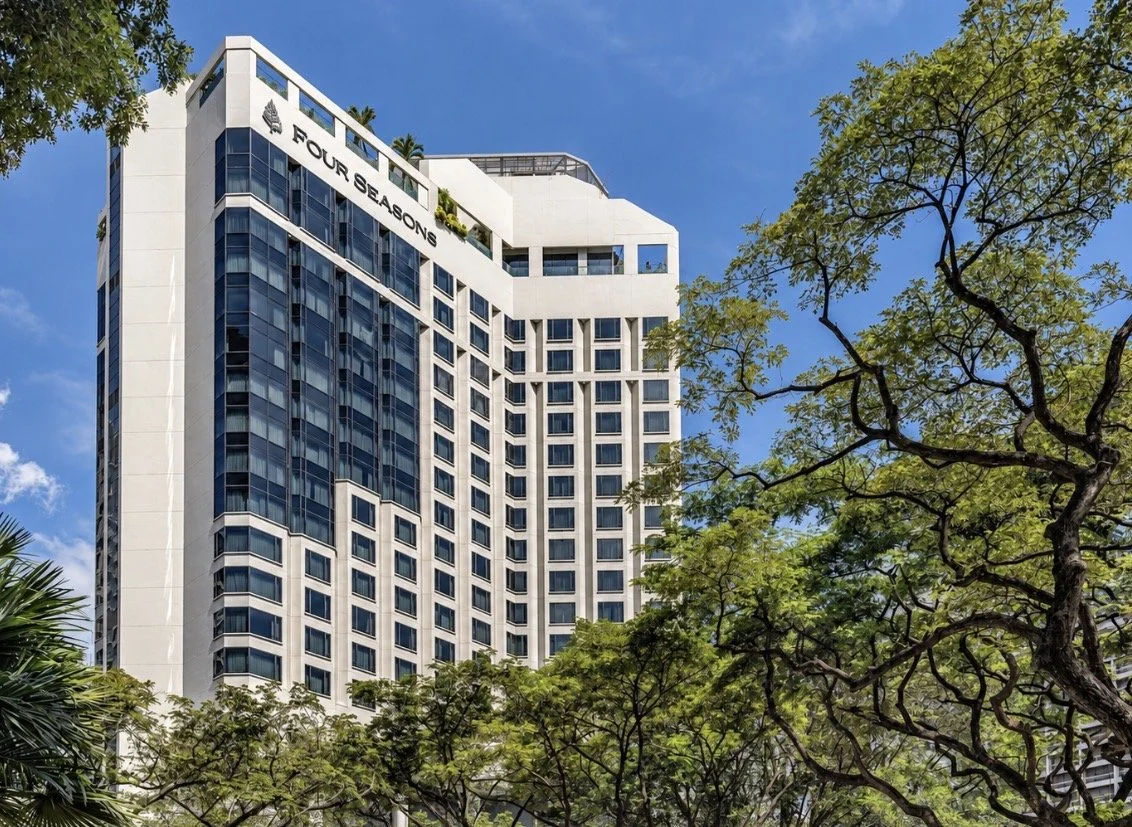
Some places become part of a journey because of the people who make you feel genuinely cared for while you are there.
Four Seasons Singapore was that kind of place for us. Beyond the hotel itself, what stayed with me was the warmth of the people we met—the thoughtful gestures, the attention and the genuine care that accompanied our days there. There was an ease to their hospitality that made us feel less like guests in a hotel and more like we had found a home while away from ours.
Those things do not go unnoticed. We felt them, we appreciated them, and they became part of what we remember most fondly about our time in Singapore.
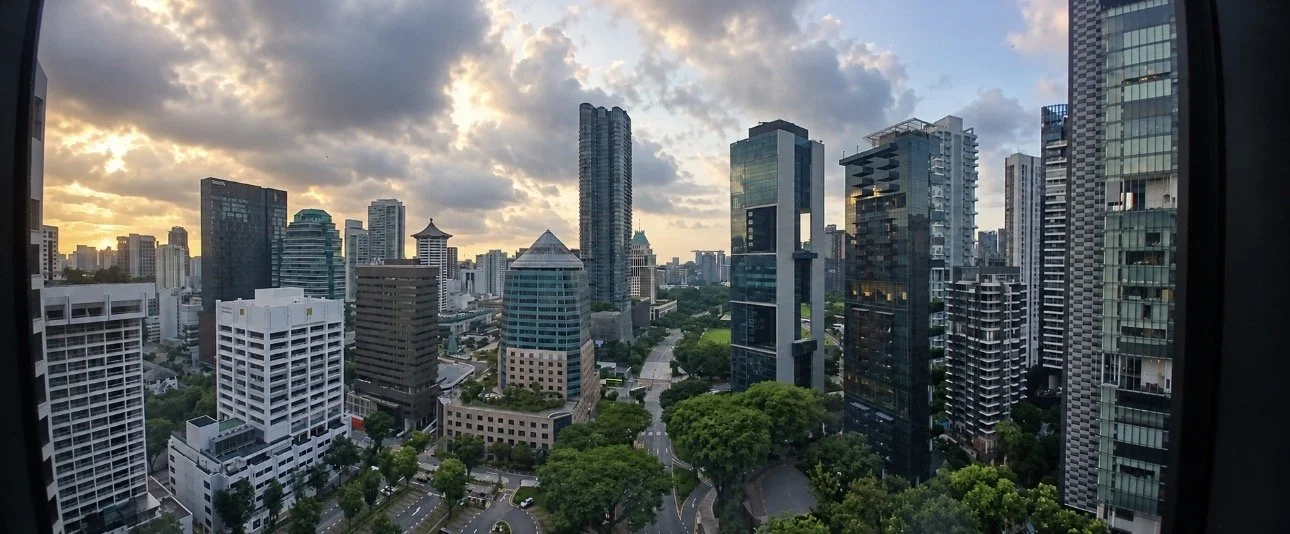
And this is how it all started, and how it ended—with this view.
From our room, Singapore stretched out before us. It was one of the first things we saw each morning and the view we returned to at the end of the day.
Somewhere between those moments, we discovered Singapore through our own eyes.